
Introduction
Quantum mechanics is one of the most important theories in modern physics. It explains how the smallest building blocks of the universe behave: particles such as electrons, photons, and atoms.
At first glance, it appears complex and highly abstract. However, the core idea is surprisingly simple:
At extremely small scales, the universe does not behave in a predictable, classical way.
Understanding this shift is essential, not only for physics, but for the future of advanced technologies.
The Shift from Classical Physics
Before the development of quantum mechanics in the early 20th century, scientists believed the universe functioned like a precise machine. If the position and motion of every object were known, the future could be predicted with certainty.
This model worked well for large-scale systems such as planets, stars, and everyday objects.
However, when scientists began studying atoms and subatomic particles, this deterministic model began to fail.
Instead of following fixed, predictable paths, particles exhibited behavior that could only be described in terms of probabilities.
Wave-Particle Duality
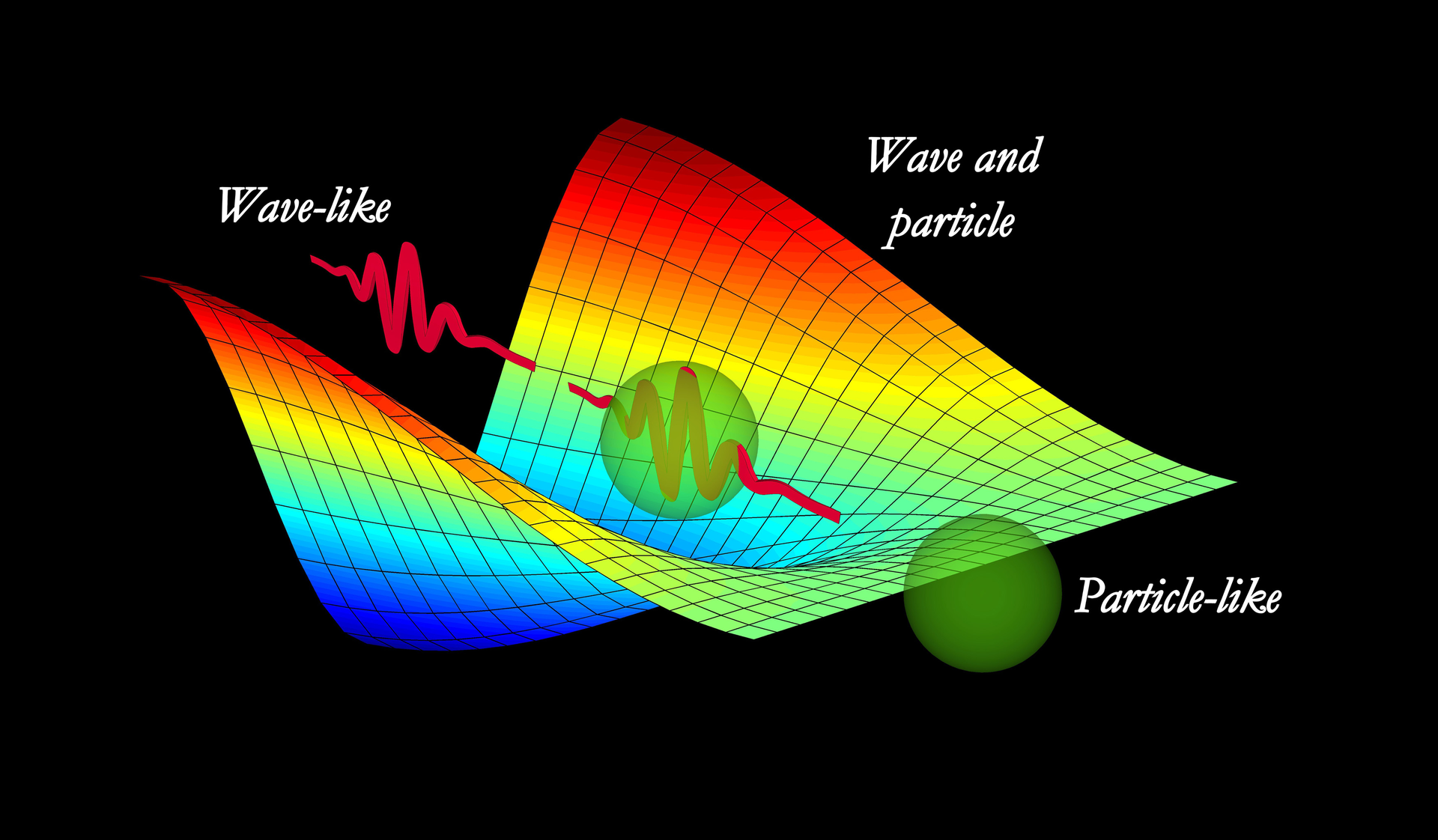
One of the most fundamental discoveries in quantum physics is that particles can behave both as particles and as waves.
Light, for example, can act as a stream of discrete particles known as photons. At the same time, it can behave like a wave, spreading out and producing interference patterns.
This phenomenon is known as wave–particle duality, and it challenges the classical idea that something must be either a particle or a wave, but not both.
Superposition
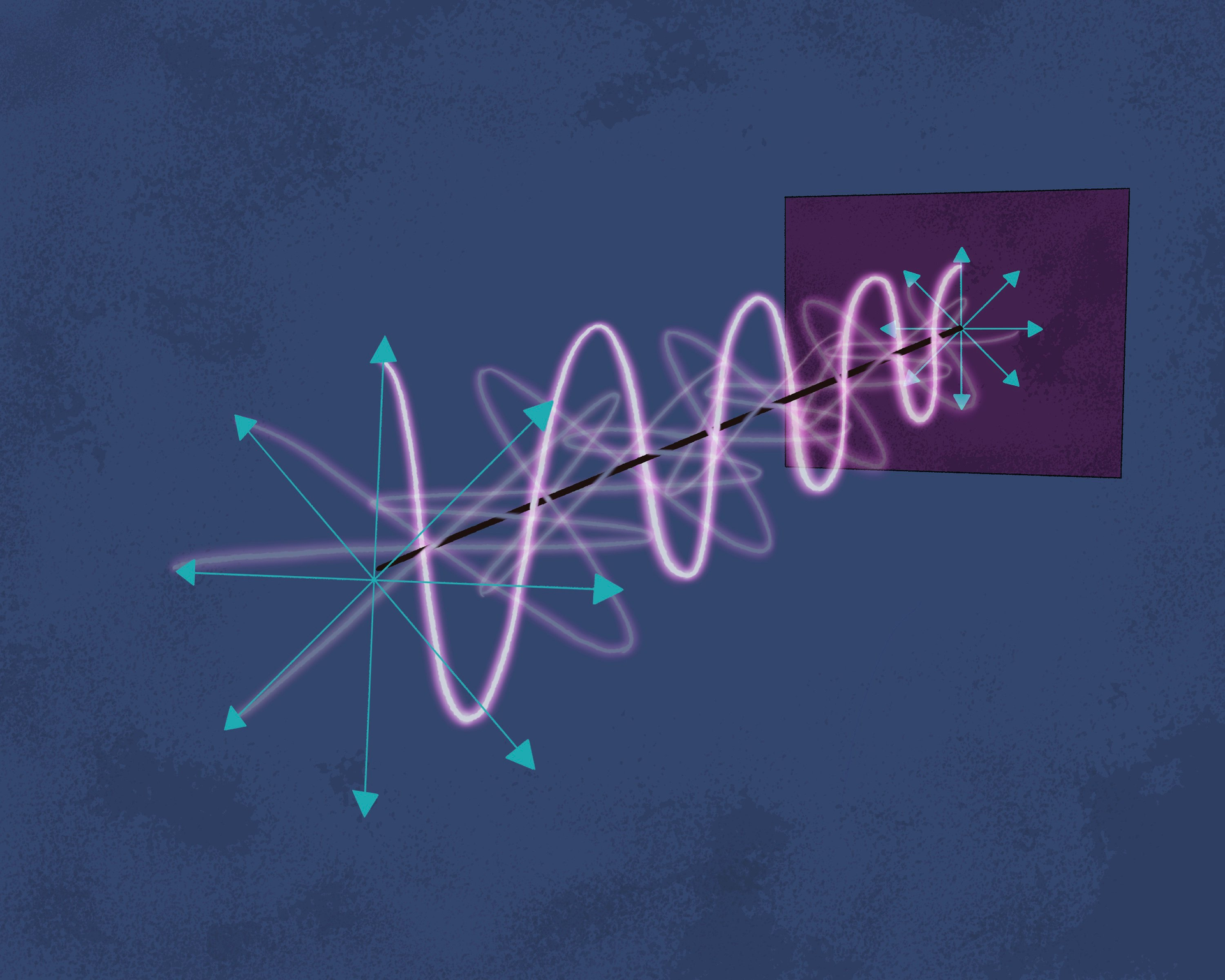
Another key concept is superposition.
In classical physics, an object exists in a single, well-defined state at any given time. In contrast, quantum mechanics allows a particle to exist in multiple states simultaneously.
For example, an electron does not have one fixed position before measurement. Instead, it exists as a range of possible positions.
Only when observed does it appear in a single, definite state.
Measurement and Uncertainty
In quantum mechanics, the act of measurement plays a crucial role.
Before measurement, a particle is described by a set of probabilities rather than a single outcome. When a measurement is made, these probabilities collapse into one observable result.
This is why quantum physics is considered probabilistic, rather than deterministic.
It does not predict exact outcomes, but rather the likelihood of different possibilities.
Why It Feels Confusing
Quantum mechanics challenges the way humans naturally understand reality.
In everyday life, objects have clear positions, definite properties, and predictable behavior. At the quantum level, however, reality is governed by uncertainty and probability.
This disconnect between human intuition and quantum behavior is the reason why even experienced physicists debate its interpretation.
Why Quantum Mechanics Matters for the Future
Quantum mechanics is not just a theoretical framework. It forms the foundation of many modern technologies, including:
- Semiconductors and modern electronics
- Lasers and optical systems
- Advanced navigation and sensing technologies
More importantly, it is expected to play a critical role in the future of innovation, including:
- Quantum computing
- Secure communication systems
- Advanced aerospace and space technologies
Understanding quantum behavior is a step toward understanding how future engineering systems will operate at their most fundamental level.
Conclusion
Quantum mechanics is a fundamental description of how the universe operates at its smallest scales.
Although it may seem counterintuitive, it has been tested repeatedly and remains one of the most accurate theories in science.
As research continues, it raises deeper questions about the nature of reality itself:
Is reality fixed and independent, or is it shaped by probabilities and observation?
About SVM Aero
SVM Aero (Shankara Vihangam Aerospace) is an emerging aerospace initiative focused on exploring and advancing the future of aviation and space technologies.
As part of this mission, we share research-backed insights to inspire students, aviation enthusiasts, and future engineers.